

S6 E5: Bringing Creative Ideas to Life Music Producer Mike Midura
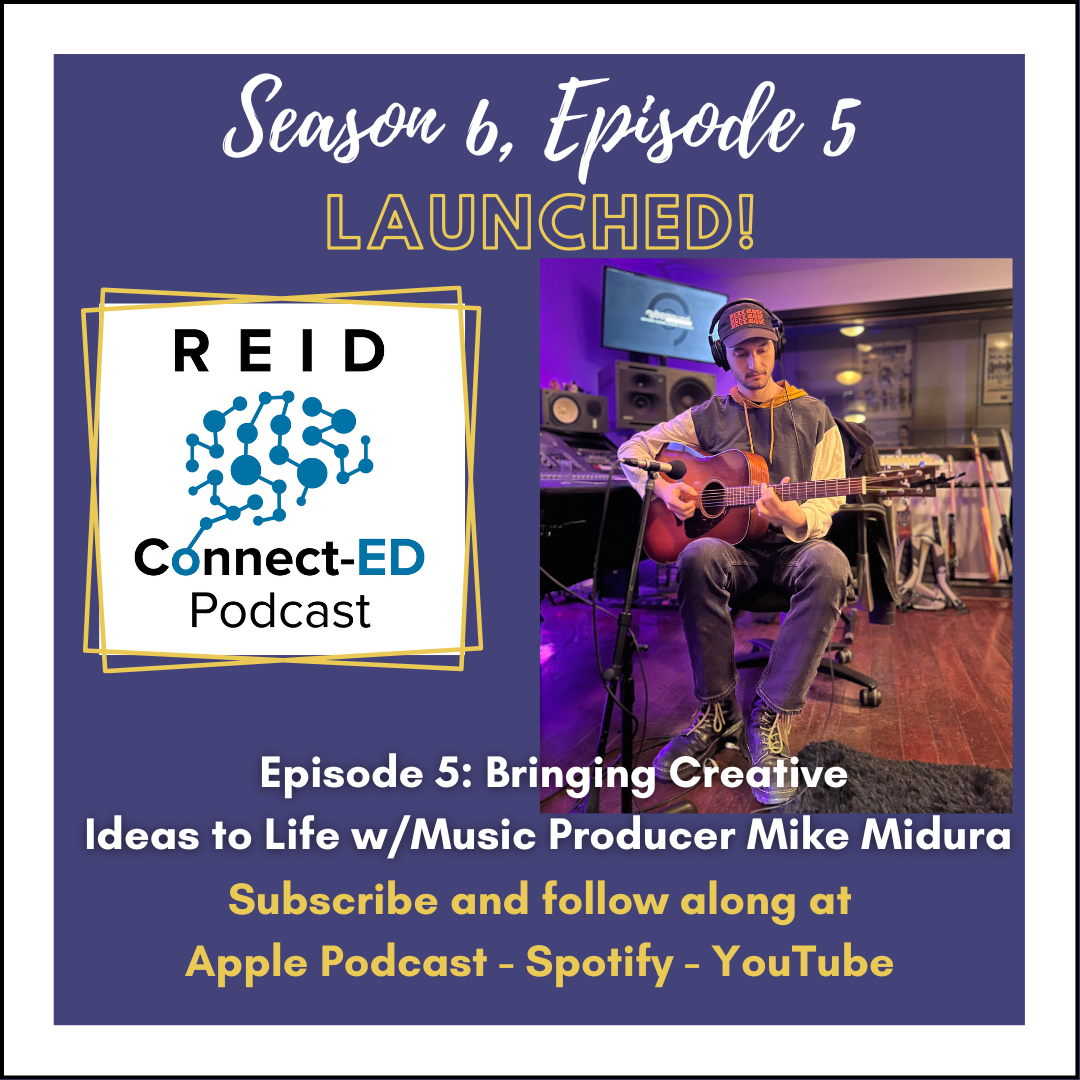
Listen Now!
-
CyberSound Recording Studios
-
Mike talks about having a variety of musical experiences as a child, which has stayed with him since then as a helpful influence in how he produces music.
Mike discusses how he needs to check perfectionistic tendencies of trying to do ‘too much’ to produce and add to a song and instead do what ‘works’ for the song.
Mike shares how drilling the fundamentals of his craft allows him to become fluent and let the creativity flow more easily.
Mike discusses how he learns about the artists he works with in terms of how they think, their expectations, and how they can best work together.
Mike discussed the importance for him to take as many opportunities as he could to practice the skills of producing music, even if the music varied across genres, as it allowed him to get better and better at the skill and decision making that is required to produce any music.
Mike discusses how ‘what you say’ is as important as ‘how you say it’ in his working relationships, as creative people can be sensitive about their art. He wants to make sure that feedback does not feel personal.
Mike talks about how important it is to understand his role in the production of a song and the artist’s expectations for working with him in the studio. This can create mutual understanding and cohesiveness between him and the artist. Gerald discusses how this is similar to the beginning stages of therapy in which the therapist inquires about the patient’s expectations for therapy.
Mike, Gerald, and Alexis discuss how it can take time to adjust to changes to a creative piece of work, whether it be a song demo, an essay, or anything that the person initially had a vision for. Mike explains this is considered ‘demoitis’.
Mike and Alexis explain how it helps to have familiarity and something you can associate with when clarifying a goal or process for something. In Mike’s case, he asks artists to give reference points when bringing in their ideas (e.g., “John Mayer’s live guitar sound”), as it helps Mike relate their ideas to other sounds or artists.
Mike explains how artists can bring in varying degrees of song ideas, from the smallest to the fullest ideas.
Mike explains how he tends to have initial phone calls with certain artists to get an idea of what they are looking for and how they imagine approaching their time in the studio.
Mike talks about being a bit of a perfectionist but knowing when he needs to ‘turn it off’ based on the context and priorities, like budget, timing, and goals. Mike, Gerald, and Alexis talk about how we have so much information and access to making ‘tweaks’ that it can lead to feeling too much power, contributing to having simply too many choices, which can feed into perfectionism. Gerald discusses how we need to create structure and boundaries and clarity around process, expectations, and goals to off-set this tendency.
Mike talks about how ‘back in the day’ (pre-digital recording), the musicians had to be very skilled to record all in one take without much room for ‘fixing’ and ‘adjusting’ the way technology allows for now.
Gerald shares his experience working with Mike in the studio of not having an ego to ‘prove something’ but rather he focuses in specifically on what serves the song and what makes sense of the song.
Mike talks about giving feedback when something is not working for a particular artist’s song. He explains how sometimes if there is not the best fit for an artist’s vision and Mike’s way of working, he would be willing to send them somewhere else rather than forcing something. Mike says he in some ways is like a lawyer, he advises based on his expertise but then allows the artist to do what they will with the advice.
Mike talks about how he's come to realize that a ‘great song’ is a great song on its own even without premier production. He shares how some of the most celebrated albums of the past were poorly produced despite sounding great because of the quality of the song and the energy of the artists.
Mike talks about people who have a career in music tend to have their hands in multiple aspects of music (versatility) to maintain a career and income over the long-run.
Mike shares how you ‘have to write a 1,000 bad songs before you get to writing a good song’ and it builds confidence through the process. Alexis shares how this is much like life. Gerald shares how sometimes ideas are just half-baked and need to evolve to come to light.
Gerald shares how you never know which songs will be liked by who - like how John Mayer shared he never thought “Daughters” would be the breakthrough single of one of his albums.
-
Gerald Reid 00:07
Mike, welcome back to season six of ReidConnect-ED Podcast. Today we're here with music producer, engineer and studio tech Mike Midura at the cyber sound recording studios here in Copley Square in Boston, Massachusetts, owned by Perry Geyer.
Alexis Reid 00:22
Mike Midura, as Jerry said before, is producer engineer, studio tech. Mike Midura is a Berklee College of Music graduate with a degree in music production and engineering. Mike has worked with a wide variety of artists spanning nearly every genre, including pop, hip hop, alt metal, singer songwriter, acoustic folk and indie rock. Do you like all those genres too? We'll get to that later. Mike is also engineered for artists signed to WMG, Sony Music and Republic records, alongside music. Mike is also an experienced audio editor and voiceover ADR engineer, having worked with companies such as Netflix, Audible, Blizzard and Dell in addition to producing and recording, he is cyber Sound Studios tech in charge of fixing and maintaining the studio equipment and technology for which we're very grateful. He uses his talents as a multi instrumentalist, which is incredible in various East Coast bands, most notably Prague metal outfit, atomic guava, who have been making waves in the metal scene since 2020 Mike, we are so stoked to have you here With us today. Yeah, thanks for having me, guys.
Gerald Reid 01:42
Yeah. Mike, we're so happy to have you, and we're you know, in terms of setting the stage for this episode, we want to understand your journey about becoming a music producer and how you got here. We're going to try to understand how you facilitate creating music with artists and bands, and how an idea that someone has in their head can turn into a studio produced album or song, and also what that process looks like, because people hear the music, but they don't really know what goes into making music. There's a whole process that people don't really get exposed to, and Mike is a shining example of what it's like to be part of the whole process, because Mike is such a unique producer, he's a musician. He's able to add on different arrangements through the music that he produces himself with the electric guitar, the bass guitar, the keyboard, the piano, right? All the different aspects that he brings to songs. He's able to do the engineering, which is basically allowing the song, the sound, to come in, into the song as to the highest quality that it can and he's able to do the mixing and the mastering. There's so much that goes into the production of a song, and it's a very meaningful experience for artists, I think. And I really want to get at that with Mike, is how important it is for artists to be able to produce their own original music. So that's just setting the stage for this episode, why we're doing it and why it's important. It's important for people to hear and I think that we want to start with with Mike, with what is your journey getting into this career? Where did it start? Yeah, what were you doing when you're five years old? That led you to get here?
Mike Midura 03:16
Yeah. I mean, I, I grew up surrounded by music. My parents, my grandparents were all pretty musical. My my grandfather played accordion, my other grandfather played guitar in jazz band. He actually also went to Berklee back in the 60s, which is pretty cool, yeah, but yeah, I always grew up around it. Listening to music was super important. My parents would show me all the stuff they listen to. And I really just kind of ran with that. My I got, my mom made me take piano lessons when I was a kid, as much as I really hated it. I have I, you know, I owe a lot to that. Got my first guitar when I was eight or nine years old. Started to like it, started to play a little bit. And then, you know, got, got to middle school and high school, and I was like, other people like this too. Okay, maybe I'll, maybe I'll, they're, they're good at guitar. Maybe I'll try to get better at guitar too. You know, stick with this thing. Yeah, exactly. And, you know, doing the usual kid stuff, playing, playing drums and the Concert Band and and all that horrible stuff my parents had to listen to in the basement for years, but yeah, kind of through that, I just started joining different ensembles and stuff. Been in high school, did a lot of jazz, did a lot of marching stuff, symphonic ensembles. So I was a percussionist primarily, but played a lot of mallets, which I really took a liking to.
Alexis Reid 04:43
And I gotta pause you right there, because, you know when, when you watch like bands and marching bands and stuff, especially in high school, I always was, like, drawn to like, the people who would like, you know, hit those big drums and those big sounds, because that will, like, reverberate as. Loud as could be, right? And I was always like, Oh, that sounds really cool. And maybe that's like the easiest instrument to play, but I don't think that's actually true. What was your experience? Yeah,
Mike Midura 05:09
I mean, so I never really, like, marched, like a full season of like playing, like bass drum or anything. I was always in pit, so, like, I didn't have to move around. Yeah, I saw, I never had to do drill or anything like that, which, honestly, that's to me, that's the hard part. Is like, I don't know where I have to be standing the coordination, yeah, I just want to stand in one place and just play some stuff, yeah? But, yeah, I played a lot of mallets. And so, you know, whatever time for college applications came around, and I when I was like, I'm gonna do, I'm gonna do I'm gonna do computer science, so I'm gonna apply to all these places. My parents are like, Okay, you have to also apply to music school, which is the opposite of what most parents say. But you know, they're like, look, all you've done for your entire last 10 years of your life is like, play music. So like, please just humor us. And like, apply to music. So interesting. You still
Gerald Reid 06:00
do use the computer you want it to get into computer science, yeah, so much of what you do involves a computer. Yeah.
Mike Midura 06:05
And, I mean, I've always had, you know, an affinity for technology and computers so that, like, it is a pretty natural transition. Because I, even when I was in high school, I would, you know, I bought a few microphones and started recording, even if it was just like me and my friends playing in our, like, crappy band, or whatever, we wanted to record something. And obviously we didn't have any money. So I was like, Oh, I, you know, I can buy a cheap interface and a cheap old laptop from some guy in a parking lot on Craigslist, true story. And, you know, we can at least put together some demos or whatever, even just like from the very beginning with that and messing around with sounds and stuff, I was like, Oh, this is, this is really fun. And it didn't even encourage me that I could, like, make a career out of that until, you know, much later. And so, you know, I applied to Berklee. Did my audition, vibraphone was my principal instrument. Wait, wait, what exactly
Alexis Reid 06:54
explain that?
Mike Midura 06:55
I think it was half, like 50% of the reason for that was, it was a really good bargaining chip, because they're like, they like people who play weird instruments. If I auditioned on guitar or drum set, there's 1000 people that audition on guitar and drum set, but there's only four vibraphones I knew at the whole school, the entire town was there. So they were like, hey, that's weird. You should come here and we'll help you out. And that was kind of my way in.
Alexis Reid 07:18
Awesome. Wait, wait. Okay, so first of all, very strategic of you, yeah. Second of all, wait a minute, how often do you play the vibraphone? Now,
Mike Midura 07:30
you know, I in high school, I had great immediate access to all kinds of weird lots of marimba, lots of vibraphone, xylophone, glockenspiel. I had all that crap just in the band room. I could go play whenever I want. And
Alexis Reid 07:41
you mentioned your family played the accordion, which is a unique instrument. Yeah,
Mike Midura 07:45
my grandfather Polish played the accordion, okay, but yeah, I mean, quite honestly, I don't think I've played vibraphone Since 2019 I finished my, like, private lesson track in school, and then I was like, Well, I don't have a vibraphone. Well,
Alexis Reid 08:01
I think you need to definitely bring a vibraphone into one of Jerry's next songs, maybe, yeah,
Mike Midura 08:06
if I had six grand laying around a vibraphone, I would have one here tomorrow, you know. But
Alexis Reid 08:13
you never know. We're putting it out to the music gods, yeah. Literally,
Mike Midura 08:15
that'll go if I can ever afford a house that's good as part of the mortgage.
Gerald Reid 08:23
That's awesome. Yeah, that's really cool. Mike, okay, so tell us more about your journey at Berklee and learning how to produce music. And it sounds like before we even go in that direction, it sounds like all these experiences you had growing up, even though they were diverse and you didn't maybe become, like an expert at one thing necessarily, like, Oh, I'm the best at this. Like you had such diversity, and you're really good at a lot of things. How do you think that kind of fed into what you do now, producing a wide range of music? Because your genre of what music you produce is pretty wide range as well. Yeah.
Mike Midura 08:58
I mean, so it's, I mean, I would say everything kind of came in little pieces, like, at first I was really obviously, like, right when I graduated high school, I was really at the top of my percussion game, because I played like, five, six hours a day. So that was a really good kind of baseline to jump into everything else, the engineering aspect of it. I had definitely dabbled with it when I was in high school, but obviously I didn't know what I was doing really. When I got to Berklee, they gave me a copy of Pro Tools, and of course, I just switched everything I was doing to that, because I was like, Oh, this is what the professionals use. Whatever you want to say about that, but that
Alexis Reid 09:38
sounds like you have some things to say about that.
Mike Midura 09:44
But yeah, I think the engineering thing came a lot from being in school and like studying it formally. That environment really helped me personally. That was the way I learned really well, was just by having professors who were really. Knowledgeable teach me how to do things. And a lot of the technical side I definitely attribute to my like formal Berklee education. And so the engineering thing was a nice, long journey of that four years of getting more fluent in all that, I find the creative flow was a lot different. I so I had played guitar in high school, whatever. The thing is, when I got to Berklee, I never wanted to pick up a guitar, really, because everyone I was surrounded with was a nasty guitar player. Yeah, and I had a guitar in my room, and I actually put it under my bed, because I was like, I'm gonna embarrass myself. So it's interesting,
Alexis Reid 10:38
because I always say, when you're surrounded by people who are so good at something, it either pushes you to want to do that, or pushes you in the other direction to find something else that you do really well, to complement
Mike Midura 10:49
whatever's happening, right? And that's kind of what happened. So my first roommate was we were randomly placed together. This kid, Matt, he's an incredible guitar player, like the most like proficient. He just picks up and plays like it's literally nothing, wow. And I lived with him. We're still good friends, and I'm always in awe of that. Yeah. Oh, me too. I literally was from day one, but like, subconsciously, because of that, I was like, Dude, I can't play guitar like he's gonna.
Alexis Reid 11:16
So this is interesting too, because we've had our cousin Joby on the show before, and you know him too, and he went to Berklee for a year, and I think he was kind of like fueled by his opportunity to be creative while around other creatives. But most people who go to Berklee, from what I hear from the students I've worked with, or people I've talked to, they often have a similar path that you have in that they're like, let me learn as much technical stuff as I can while I'm here. Because if you end up doing the performance side of playing music, like, at least you know what's going on in the background versus only being in the creative flow. I don't know. I feel like it can go either way. And I'm curious about your experience, especially for anybody who might be interested in pursuing music school in your future, who might be listening, yeah?
Mike Midura 12:05
I mean, I think a good sort of way to think about it is like, you want to, at least for me, like, the best way that worked for me was, like, I want to study the technical stuff and be so proficient in it that it's simply no longer a barrier to creativity. Yeah. Like, I want to be able, like, if someone says, oh, I want a piano right here. Five seconds done.
Alexis Reid 12:25
You do that. I've seen you in action. We'll talk about that in a few minutes too. But, like, you can hear thing and then create it, which is so cool, because you have that technical stuff mastered. Yeah,
Mike Midura 12:36
exactly. And I mean that that technical stuff just comes from doing it a lot, and as much as I attribute that to school, like being here at working in a studio, and, you know, having the opportunity to just drill the same skills over and over and over and over again, whether that's editing audio books, recording rappers, recording singer songwriters, whatever it is, doing the same thing over and over again, you're just, you're gonna get fast at it.
Alexis Reid 13:00
I'm gonna press pause here, Jared, and I want you to chime in, because there's such a theme in all of the people you've interviewed and brought on the show who are really great at what they do, because they often will highlight, like, I had to just get so good at this technical side of what I do well before I could, like, bring all the pieces together. And it's almost like you You shed like an insecurity or like a lack of confidence when you, like, feel so proficient at a thing. But I feel like, and I've said this a million times, so forgive me, audience and you guys, but I have to say it again. I feel like in our world, we skip that phase of things, and everybody just wants to jump to being really good at pulling the pieces together. But even gene Sager, who was on this season, season six, he was saying the same thing. He's like, I just had to practice and practice and practice and drill myself. So I felt good letting things flow and being more creative, because I didn't have to draw back to the technical side as much, because it was a part of my repertoire. Yeah,
Gerald Reid 13:59
you know what's cool about Mike's story too, is he was doing this even when he was a kid. He's like, hey, let's get together and and just like, make this work. Let's try to, you know, record our music, literally just jumping into doing it. Yeah, yeah.
Mike Midura 14:10
I think, you know, people like Shane who have the ability to just buckle down and grind something in a lot of ways, like, you're super lucky to have your passion also be something that you like, want to do, like, as a career, you know? And that's, it's a lot more. It's a lot easier to grind something like that. When you're like, I this is like, my job. I'm also, like, super into it,
Alexis Reid 14:36
yeah? Well, that's apparent too. Yeah, that's a really, it's a really cool thing. But going back to what you said, Jared, you know, Joe said this too when we interviewed him. He's like, in high school, like, he was, like, I was running a band. We would go out to the garage and, like, you know, we would have band practice. And like, some of my friends, they were my friends, but they were also in the band, and they didn't always like me when we were in the band, because I'd be like, Hey, we got to do this. And. Yeah until it sounds right. Yeah, were you like, running court when you were recording back in the day too?
Mike Midura 15:05
I mean, a little bit I got, I kind of owe, like, a lot of my discipline to, like, doing the like, the like scholastic music stuff and like being in like Concert Band, and specifically marching band, because my school, like, we were extremely competitive. We were, like, a very high ranking school for, like, marching arts. You were here in Massachusetts, yeah, I went to high school and ran the mass. And we were, yeah, we, we were pretty hardcore about it, like, we would practice, like, probably, like, 20 to 30 hours a week, depending on the season, and like, it was, it was brutal. And so obviously, like, my, the educators that I had were very, like, discipline oriented, yeah? And I, obviously, I got caught on to that, and I was like, Oh, look like, if you want to get stuff done, you have to be able to, like, lock in a little bit,
Alexis Reid 15:53
yeah. Wait, you like you, you kind of, like, you dropped the Oh, yeah. I did these kind of, like, more classical training when I was younger, and then jump to Berklee. Can we? Can we drill down? Because I'm such a proponent of, like, arts and education, and if you had a great experience with that, or even if you didn't, can you like, bring us into a day in the life of what that was like being young? And if you're into computer science, there's like, so much, you know, the kids call today big brain energy. You could bring into that right to really, like, figure that out, but then also to do music at the same time. What was that experience like for you?
Mike Midura 16:27
I mean, I find, like, in high school, I was really, like, I was like, a fine student. I wasn't, like, straight A's or anything, but, you know, I whatever I managed. I tried as hard as I don't define you, man, like, just setting the stage, like, I tried as hard as I needed to, you know, like, just to kind of get by, and not, you know, get get in too much trouble. But, like, just doing all that stuff was, like, I mean, whether I knew it or not, it was really good way to, just, like, keep me out of trouble, just kidding me, like, you know, occupied with my time, and it was something I really enjoyed doing. It was a great feeling to, you know, get to a performance and get to be a part of something, you know, whether, I mean, whether it was like a small jazz band doing a performance, or whether it was like 120 people in a marching band doing a performance. Like, it's a very, like, satisfying feeling to, like, get to the end of a season and just get to let it go. Just let it go. Yeah, that's awesome. It's great.
Gerald Reid 17:18
Nice. Do you have any stories you can share about a teacher, either at Berklee, or your band teacher, your band leader in high school, just someone that you felt really made a difference in terms of how you learned or just how you went about music. Great
Mike Midura 17:32
question. Yeah. So I think the first person in my like formal education that comes to mind I had he was actually taught me, like, drum lessons when I was in elementary school, and then when I was in high school, he was, like, the the lesson director. His name is Ryan loud. He's a percussionist, and he, like, he, first of all, he was a great teacher, and he had a really great way of, like, connecting with us and like, kind of tailoring what like his education to like what we wanted to do. So, like, he was a really good drum set player. Great vibraphone player, great marimba player, and he actually exposed us to a lot of, like, different types of music, which is really great because, like, obviously, like, when I was a kid, I wanted to learn, like, rush or whatever I wanted to play yy Z or whatever. He's like, Yeah, he'll show you how to do that, because he's great, yeah, He'll teach you how to do that. But, you know, in in high school, we were super lucky to have, he actually, like, studied a lot of, like, West African, like Ghanaian drumming and stuff, and a lot of like, you know, Afro Cuban, like Latin music and stuff like that. So he would always, like, we had like, a world percussion program. We'd bring in, like, different cultures. And I got to play like, steel pan growing up, which is like, crazy. Who has gotten to do that? It's amazing. It's really, really amazing. And like, I like, we owe that to him. And he was really, really, like, insistent that we are all exposed to all this different types of music. And it was, yeah, it was just great. What
Gerald Reid 19:01
do you think that did for you?
Mike Midura 19:04
Um, I think, you know, it more than just, like, obviously, like, making me, like a more, like, worldly person, which, like, in general, was great because he taught us a lot about the culture of the music and stuff, which is super important, but, um, it really, like, informed my like, vocabulary as a musician and like, I like, specifically think about kind of, like, the West African stuff and like, a lot of like, the rhythms and things that, like, I would spend like, hours and hours doing, like when I was in high school, like, still to this day, like I find myself just like, Yo, I'm tapping on a desk or whatever. It's just like, just like, ingrained in me for some reason. And it really, just like, Yeah, it really helped my like growth as a musician. It's so
Alexis Reid 19:46
interesting because, you know, I'm thinking about how, like, growing up with music and our family and in our household, as you said, and Jerry and I most certainly grew up with a lot of music around us, but in a lot of other cultures, especially in the. African culture. It's like music and dance and rhythm is a part of, like, everything they do, and so many traditions. And to be immersed in that, I like, I always imagine it as it's like, it's in their DNA, it's in their veins, yeah, which is amazing. And to be exposed to that even in like, the smallest degree, right? Because it's not in our everyday life, but to Expo be to exposed to that in such a young age is so amazing. And you know, I I feel grateful that I know a lot of great music educators who try their best to do this theme. But I'm just going to put out another plug here for all the educators or music enthusiasts to, you know, go wide and go broad, because you never know what beats, what sounds what traditions are going to influence the people that are listening totally even, like, the smallest thing could become a domino effect. Exactly.
Mike Midura 20:47
Yeah. I mean, like, like, quite honestly, I don't envy his position, where he was trying to, like, convince the school to, like, hey, like, give us a bunch of money so we can do this. Like, that must have sucked, but he fought so hard for it. Yeah. It was totally worth. It. Was an incredible, like, genuinely, like, an investment, like, in the community. Because, like, anyone from anywhere could just come and join this program. You didn't have to be a kid in school. There was, you know, like parents were doing it and, like, you know, whatever, people who graduated were coming back and doing it, yeah, yeah. And it was, it was just a super, like, rewarding experience. Yeah,
Gerald Reid 21:19
it makes me feel like it makes me think of when younger people are more able to learn different languages, because you kind of are, like, learning different musical languages at that age. It's so
Mike Midura 21:29
true. I even just thinking back, like how quickly I was able to learn like, 25 minutes of music when I was in high school, that would take me, like two weeks. I'd be like, Alright, let's go do it. Like even thinking about having to do that now, like learning, like a 40 minute set, like on drums. I'm like, I gotta make charts. And I go,
Alexis Reid 21:49
Well, I will say, you know, going to the neuroscience, you'll find this interesting, that when we're pre teens and teenagers, our brains are pruning as rapidly as when we're like, babies, right? So your brain has like, these two huge bursts of when they change the most, and when we're like, pre adolescence and adolescents, that's like the next burst. So this is also why we remember so much about like that time period, because our brains are making these really strong neural connections which allow for us to learn faster. And it stinks because, you know, just as another plug, as we're getting older, doesn't mean we can't learn new things. It just means it takes more effort, more back then, you know, right? That's a plug for young people too, who might be listening for all my, you know, high schoolers out there, go learn some random stuff. Take take it all in, observe it now, because it's it will stay with you if you practice it, yeah, and
Mike Midura 22:41
take stats class. But, I mean, if it's
Alexis Reid 22:46
your thing, right? Yeah, you never know. I always say stats is, like, the the language of math. You get to tell a story with math and numbers if you're not into math, but, but, yeah, like, learn your skills early, because I go back to the guitar or to learning a new language, and I'm like, Oh, this is taking me way longer than it used to. Yeah, not to say I'm older. Any of us are old, though.
Gerald Reid 23:13
Yeah. And like you said, exposure to music early on is important. I mean, we can think of the even the popular music we listened to in high school, like a friend of mine just in our group text that we always talk about music, and he's like, Yeah, you know, I was just looking at the top 10 PRL songs of 1999 and we were guessing the songs you
Alexis Reid 23:32
said. We weren't going to age ourselves, but
Gerald Reid 23:36
it becomes ingrained in you. You know, it's an emotional and it's also part of our identity development in high school. So, you know, the more we can get exposed to, the more identity our identity could be, more expansive. And Mike, I think you're a really good example of just kind of being a well rounded person and being expansive, not only as a person, but in your in your music, in the way that you approach music. And it seems like your early experiences really helped you with that.
Mike Midura 23:57
Yeah, I definitely agree. I think it's, you know, I it is important, I think, in this career path, at least, to be able to do a lot of, wear a lot of different hats, at least, that's what I've found in my experience. You know, whether it's, yeah, oh, like, Oh, can you come fill in for somebody our bassist is sick? Can you, like, learn this music and play on Friday? Like, I've been able to do that because, just like, I don't play bass, I don't even, like, I barely play guitar, you know, but like, I you just do it sort of good enough. And, yeah, yeah, just don't play outside of your range. Do you have fun doing it, too? Oh, absolutely, yeah. I mean, it depends if it's something so crazy, and I'm, like, really stressed about the parts, like, I'm not parts, like, I'm not gonna have as much fun. But yeah, I don't think anyone who plays be like that difficult would
Alexis Reid 24:47
ask me this. Well, I was gonna say this at the very beginning, but I have to say, you know, people might be listening and be like, oh, is Mike the best producer at cyber sound? Is that why they're interviewing him? And I. I will say that like they're all amazing. Every single person who works here huge props, especially to rob, who's our primary producer on the podcast, and everybody, even Perry, the owner, is a great producer in his own right. But I want to say that, you know, we have you on here to highlight and showcase your skills, but also because you and Jerry have formed a really cool bond over the past, what, year and a half, two years, which is really sweet and sweet in like a, like a cool, like 90s, sweet kind of way, I guess, so sweet bro. But I want to, like, I want us to drill down a little bit into like, that relationship, and we can use this, you know, we use Jerry and I as an example of pretending I was a patient in his therapy session. But we can use this as an example of, you know, a musician who created his own songs, and this idea for how he wanted to produce his songs with the producer. Because I think, you know, a lot of people who are creative and have been writing music, and I think since COVID Too more people have been tapping into things that they might not have done before. And I want us to, kind of like pull the curtain back a little bit for people to hear more about what that experience is like. Because just to set the stage for those of you who don't know you know Jerry, I'll let you tell your story about how you picked up a guitar for a second, because I think it will inform how Jerry got to this point of producing with you. But during COVID, you really got back into music, because there were, you know, spaces of time that you know, a lot of us didn't know what to do with, and you channeled it in a productive way, to go back to your creative aspirations of, you know, being a singer songwriter, not to become a singer songwriter, I don't think at the beginning, but to express yourself in that creative way, which is your therapeutic process too, which is really nice. But, you know, all of it kind of came to life when you brought your ideas and your music to Mike. And I feel fortunate that I got to sit in on a couple of those sessions and both like hear and see and talk through some of the stuff with Mike and how he makes decisions, and then also knowing you and your process. So it would be really cool for us to pull the curtain back a little bit and talk through that process. And I'm gonna say because I've whispered to Mike before, and be like, Well, how do you give feedback when you don't want to hurt somebody's feelings? But you know, a change needs to be made, because we want to honor your process and also make it like the best it could be. So don't hold back. Is my point. Let's really let it all out here. Exactly, exactly. That's my point. Yeah, not to be fearful of feedback. Part of this, part of learning, as we talk about all the time here, is, you know, taking, receiving and using feedback to guide us. I think that's where learning happens. So Mike, we're coming back to you in a second, but chair real quick. Your mom handed you a guitar at like, a really vulnerable moment in our lives, when we were going through a lot emotionally, um, when we were younger. I wonder, what if you could just quickly share what music was like for you that got you into learning how to play and eventually write music? Yeah,
Gerald Reid 28:17
I'll try to make this quick, because I want to put all the emphasis on Mike for today, but yeah, 15 years old, mom gave me a guitar I was like, what? I don't know if I want to do that. Obviously, sometimes I like overthink things a little bit. I'm like, oh, and whatever. So she got me two guitar lessons, and I basically just went to two or three guitar lessons and then just stopped going to lessons. But I just, I basically just played my entire life on my own, just playing around. I never really did anything intensively. I didn't do any training really. I didn't like, you know, we didn't have YouTube back then. I wasn't, like, looking up YouTube tutorials university to get my degree from YouTube. But basically just did music on my own, privately, and I would write poetry, and I would turn into a song. I would play here and there. Our cousin played a little bit of electric guitar, and so
Alexis Reid 29:11
I'm gonna press pause, and I have to emphasize this, and I hope you're okay with me saying this. This is at a time where, you know, Jerry is a deep thinker and didn't always like share and talk so much, and mom's like, you know what? I think you need to let all this out in a certain way, and handed you a guitar. And I think that was almost like, you know, not that you needed permission to express or share, but that was, like, a big moment. And I'm saying this because music could be so therapeutic in so many ways, and I want us to tap into that some more too. But I think it's a really important point that, like, the moment that music kind of struck you as like, oh, I can do this thing was where you were kind of processing through the experiences we were having as teenagers.
Gerald Reid 29:55
Yeah, absolutely. I mean, I have binders still of like, just. Songs I wrote like this, like hundreds of songs over the past, like, of my life, 40 years old now. Yeah. I mean, 100% of that music is so therapeutic to be able to express yourself in different ways. Like I said, I never did it publicly, and I would only over the years, and especially during COVID, would start sharing with you and Mom, is this okay?
Alexis Reid 30:35
Very brutal feedback. I apologize, Jerry. I was maybe too brutal, but moms aren't honest, but not brutal. Yeah, she's
Gerald Reid 30:45
definitely honest. I even did the, there's a, there's something at the Cape called poetic license. And it was like, it was like, for a bunch of people, like on public television, doing, like, sharing your poetry. And I literally did that online during the first time I ever
Alexis Reid 31:03
did. But I really wanted you to share your story, because I think it helps to frame how Mike helped you to have more courage and bravery, to really bring your music to life in a new way. So starting with, like keeping it to yourself, like slowly dripping into sharing it, and then all of a sudden I, you know, we were, we just started the podcast. Jerry's like, I think I'm gonna look for a studio to record some of my music. And I was like, I know a studio. I'm like, maybe we could record the podcast there too. And then everything just came together, which was really cool. So I don't know if you know that backstory, but I think it's a really interesting progression. And for anybody who's listening, really. You know, the point is for you guys to share your experiences, so others might be inspired too. So I appreciate you sharing that Jack, because I think it's interesting and it bridges into your relationship you've built with Mike as a producer. Yeah, 100% slash instrumentalist on like every other instrument that you don't play that's on your songs. Let's
Gerald Reid 32:01
just say my confidence is boosted by feedback from family and also from Mike. And just to quickly set the stage, the music I make is about therapy. Because I'm a therapist. I'm a psychologist, and during COVID Especially, I started to channel the stories and the emotions of therapy into songs as a way to kind of give back and to kind of give, almost like a soundtrack to therapy, to it's all positive, inspirational. And my confidence really, really, really boosted when I met Mike, because I have no idea what I'm doing. I would always tell Mike I don't know what I'm doing. I wasn't trained and but Mike, almost like built confidence to be able to see that there is a way to do this. And Alexis, you know, she gave me the suggestion that, you know, why don't you work with someone else to make your music better? And you know, I had to reframe that so, So Mike, maybe you can share your experience on the other side of it. And to use this as an example of everybody you work with, because I'm sure other people you work with, because I'm sure other people you work with are going to listen in. And I don't want this to be about me necessarily, but about your process. And we can use this as an example about what it's like to bring creative ideas to life.
Mike Midura 33:10
Yeah, I mean, it's when you are a new artist, finding your your sound, or your voice or whatever, there's like, there's always going to be some growing pains, not just, you know, from the technical perspective, because recording is like a different skill than a lot of other musical performance situations. But you know, in finding your ability as a songwriter, your ability as a player, you're gonna realize the second you step in front of a microphone, whoo, maybe I'm not as good at this as I thought. And that's everybody though that's if you've never recorded before, you will instantly realize that, oh, I can hear everything I have nowhere to hide, which you know, to some people can be discouraging at first. But you know, if you push past that a little bit and you make a couple songs to start, or whatever, and you just want to have recordings of them, you kind of realize, oh, okay, well, I was really not so optimistic about this when I first did it. But like listening back to it, this is actually pretty good, and the first few are always going to be, you know, you hear the struggle in them a little bit, which is true for most people. But, you know, it's, it's like, like we were saying before, you just keep working at a skill, and it gets easier recording specifically, like you get used to hearing yourself in the headphones. You get used to a process that works. You know, you start to understand what you should bring me like, you should, you know, don't just be like, Oh, I have this one lyric, and then show up to the studio. I'm like, great. What do you want to do? Which some people do, and I think that's totally come with a song, which is great, but I'm. People don't. Some people are like, Oh, yeah. Like, I just, I had this idea, or I like this song that's already exists. So I'm like, yeah. I'm like, I'm down for whatever I'll make. I'll make something from nothing, if that's what you need me to do. But you know, it's always easier with a vision going into it. I think so
Gerald Reid 35:16
that point you're kind of a collaborator with someone who brings you that exactly, smaller idea, yeah. And
Mike Midura 35:22
I think a big part of it too is starting to understand your role in the collaboration. Because like, as you know, as any of us who work here will tell you, sometimes you press record and then you sit on your phone for two hours, and that's the extent of your collaboration. And some people, that's how they operate. They want to really police themselves in the recording process. They don't really want your input, and that's great. There's a lot of people who operate like that, but and then there's the other side, where like, they want you to tell you, like they want feedback on every tiny, little, miniscule thing, to the point where it's like, I could just talk at you after every take, but which I try to, you know, not do that. Yeah, there's a fine line between getting enough takes and getting feedback, which is different for everyone. But yeah, understanding your role, like in the collaboration is super important, whether you're actually producing them or whether you're more just engineering.
Gerald Reid 36:21
Yeah. So, so you, what's your, what's your process of figuring that out? Because, I mean, someone sets up time with you in the studio, right? And they show up. I mean, is there kind of like a process you go through to try to figure out what that person needs? Because in some ways, there's a lot, like therapy, yeah, someone comes to my therapy appointment, or someone works with Alexis, and part of, a huge part of our job, is like, what's going on and what do they actually need from our interactions? Our communication
Mike Midura 36:46
is exactly the same as exactly the same process where you read the room, feel it out if they're being receptive to your feedback, awesome. Let's dig in a little more. Let's push it a little farther. If they're being like, okay, whatever. Then just back off and just let them do their thing. Um, I've been in both situations where I'm like, if they're asking my opinion about something, I'll gladly give them my opinion, but I won't give you know advice they're not asking for that type of thing. And that's and that's a good relationship where they they know what they want, they know whether or not they executed it. And I'm not going to say anything unless they ask. But yeah, you just kind of have to feel it out and like, kind of start to once you know, once you get more comfortable together, maybe it's a couple sessions in whatever you push the boundary a little more, push it a little more, offer a little more advice. And you have to do it in a way, obviously, where it doesn't seem like you are insisting anything. And you know, like, I'm sure, like, you guys know this. Like, you gotta, you gotta, like, put, like, a positive twist on things, yeah, most of the time, because artists can be very humans have egos. Humans have egos. And like, artists can be sensitive about their art, and it's it like, it's easy to construe constructive criticism as I'm attacking your art, which is an attack on you. And so, like, language, yeah, I'm sure it's exactly the same. Language is very important, yeah, the way you say things is often more important than what you're actually saying. Oh, so true. Totally. That sounds really awesome. That was an awesome quote that sounded so deep.
Alexis Reid 38:25
It's true. It's so important. It's the same thing in teaching. It's the same thing in Jerry's work, too. It's It's like in any relationship, right? You, we often don't inhibit enough to, like, catch ourselves, but in that interaction, it can make or break your relationship with the artist, or with your work, or with anybody in your life, and you
Gerald Reid 38:44
don't really know, like, what the person's thinking in the first place, which is really important. And so, like, let me give a quick example. I remember when you would record me doing a part of a song, and I would listen back, and you would make a change to it that I think was, like, a great change, and we would have interesting conversations about this, because in my brain, when I wrote the song, I can hear what I imagined this song to be like. I'm like, Oh, this is the shape of the song. This is the Mel. This is kind of how it sounds in my head. And then when they play, they work recorded on my phone. And when you would make a change to it, it would like, qualitatively change it just a little bit. Literally, my brain had to adapt to what that sounded like. And I would, literally, you would send it to me. You would bounce the file, send me the mp three, and I would have to listen to the new version of it probably 10 times over and over and over and over and over until it's like, Oh, it sounds great, but at first it's like, oh, wait, what? Even though it was great, I'd be like, Oh, different
Alexis Reid 39:43
Change is hard
Mike Midura:
“demo-itis”
Gerald Reid 39:51
Did you learn that at Berklee? yeah. No, did you coin it?
Mike Midura 39:53
No, I didn't. Any producer will tell you, don't get them. Oh, it is, yeah.
Gerald Reid 40:02
What's your experience with with that, you know, in terms of the collaboration process?
Mike Midura 40:05
Yeah. I mean, it is true, people get very attached to what they have in their heads. I do it too. Yeah. I will be producing a track, and I'm, you know, whatever we'll we'll do like, a couple versions of it that are completely rough, like, unmixed, like, no anything, like mistakes in it. And then I finally do the first mix I'm listening to it. I'm like, why is this, like, this part doesn't sound right? I'm like, oh, because you actually played the correct note on the guitar part. Like, and then I have to just, like, retrain my brain to be like, no. That's actually like, yeah, stop, stop thinking about that. It's
Alexis Reid 40:41
so true. It's like, you know, I work with a lot of, a lot of students who will do their writing, to Jerry's point, like, they don't always get it out of their head the way they're hearing it or thinking about it. And then the same thing is, like, when you make a little tweak, it takes time to adjust, to be like, Oh, this is okay. And I think it's there's two reasons, either one, like, Oh, I'm done. I got it out. Yeah, or two, this is good enough. Or maybe something else is getting in the way of the process of, like, continuing on. Yeah,
Mike Midura 41:09
that's like, a big part of what we do as producers. Like, you feel like a, I'm a translator between your brain and the real world. Yeah, totally. It's such a skill. Yeah, and it's, it's, I mean, it's something I'm still working on. It's something I'll never stop working on. It's not an easy thing to do. And everyone's different, you know. And I think, like, you know, getting the best way to a lot of times, the best way to communicate something like that is through, like, references to things that already exist. And like, there's a lot of times like, I find most in most talking about music, I speak in terms of other things, which, like, sometimes, like, I kind of realize this, that sometimes that can be, like, a little insulting to people because they think I'm saying, like, Oh, this is unoriginal, when in reality, I'm saying, No, this is I'm comparing it to something that already exists, yeah, to, like, literally, give it a direct line in my brain, yeah. And I try to make that very clear, because every time someone will play a demo for me, I'm like, Oh, this sounds like this song, or like this band, and like, that's meant to be like, oh, like a compliment. Yeah, exactly. It's meant to be a compliment. It's meant to show them that the gears are turning and I can understand their vision. And, you know, I will always ask, like, if you know you Oh, I like this specific guitar tone in mind. You're like, Oh, I really love John Mayer's live guitar tone. I'm like, okay, sick. That's a great easy reference for me to pull up and try to emulate that, you know,
Alexis Reid 42:39
but our brains also do better when we have familiarity, right? When there's something that you can associate with, because I think it helps to clarify what the goal is. Because I imagine, you know, humans in general, have a hard time clarifying what their goal is, and that in your work, especially from the creative process, sometimes there isn't a clear goal. It's like, there's like, there's these things I want to put together and create. And going back to Jerry's question before too, is, is your process when an artist shows up the same, like, do you have, like, a process that you go through as you're starting to make music with people, or is it something that you've developed as you get to know the artists over time, or, yeah, curious about that, I
Mike Midura 43:23
try to start kind of in the same place with everybody, but inevitably it is something different for everyone. I mean, it's all variations on the same, same set of skills, same whatever. But it's, it's the in the details of it that's always different, yeah? So like Jerry, like, we have a pretty good like system for getting the song down right, like we always just do like, a cut of acoustic guitar and a cut of vocals, because that's how you wrote the song. So to me, that's the fastest way to get, like, the purest vision of the song out of your head and into something that I can start working with. But for some people, it's like, they'll come in and they say, Oh, I just have this chord progression. And sometimes that's all they give me. And I say, All right, let's get a little deeper than that. So before this is before you even like do any arrangement, I'm like, Okay, let's do you have like a specific genre you want it to sound like, or is there, like, a specific song you were kind of listening to a lot at the time that you really liked when you came up with it? And sometimes we'll make an entire instrumental before we even record a single vocal, which I don't think is something we've ever really done, we always kind of do the vocals first. And that's also a logistical thing too, of like, if you're trying to get a couple songs done in a session, sometimes that's how you have to do it. Like, when I when I work with bands, you know, we'll do a Drum Day. So this requires the songs to be already written and arranged, which I make very clear. I'm like, Look, if we're recording seven tracks of drums, these. And songs better be written already, because otherwise we're gonna have a really bad time later down the line. And I'm not setting all this crap up again. I mean, I will, but forever, but, you know, yeah, but it requires
Gerald Reid 45:12
planning, is what you it requires planning. Yeah, exactly.
Alexis Reid 45:15
That
Mike Midura 45:18
makes sense. Um, yeah. And then it's Yeah. The logistics of it are interesting too, because obviously, like, in a commercial facility like this, I can't just leave a drum set set up in this room for five days. Like, if I could, I absolutely would, but so it's something you have to plan around, and that it's going to depend on the person you're working with. Well,
Gerald Reid 45:40
it's interesting because your first initiation with someone might be that they just show up and there's no pre discussion about what they're bringing to you, necessarily. So it's interesting. So what advice would you give to an artist who might use a studio if they've never met a producer before?
Mike Midura 45:57
Yeah, I mean, I think, you know, like when we met, it was just kind of like, oh, you showed up. And, like, we got to know each other, and I'd seen you around and stuff, and then we started talking and figuring it out. But like, now if it's, if it's especially, like a young singer songwriter, I try to be like, hey, like, give me a call tomorrow and we're just, we'll talk about what you want to do before I even like book time with them or anything. Just to like, not only like, for me to understand what they want to do, but to like, kind of set their expectations as well, of like, what's possible, because that if you've never set foot in this environment before, your expectations are going to vary wildly. Yeah, some people are like, Oh, it's going to take like eight hours to record, like, the guitar. It'll probably take like, 40 minutes, but unless
Alexis Reid 46:46
they're learning to play guitar while they're recording,
Mike Midura 46:50
depending on who it is, I might be like, Hey, do I just do that real quick? I'm happy to let you figure it out. Yeah, whatever. But like To each their own. Yeah, to each their own. But I like to, I like to kind of chat with people about what's going on. And, you know, if, like, I want, I want to know people's budget, I want to know people's timeline. I want to know their expectations of what's going to happen. And I just like to just get to know them a little bit and have a conversation with them, so I can even just like having a phone call with someone you can kind of feel out there, like, and there, like energy a little bit. If they're, like, super, like, neurotic and like, really, like controlling, like, you will get that you will immediately get that on the phone. Or if they're really cool and laid back, and I just want to make my make my album, man, like, that's great too.
Alexis Reid 47:40
It's very executive function of you, like, take stock, plan it out, do a little preview. Well, that was actually another question I have because, and we'll dive into kind of, like the producing and editing piece of things. Because, do you think it requires a producer to have a little bit of a perfectionist personality and quality to be a really good producer.
Mike Midura 48:05
Yeah, I think some people would say that, and I think some people would argue the opposite. I if it sounds good, it is good. I don't know like it's, I understand. It's very hard sometimes to something you've made be like it is now done that is nearly impossible to do in, in anything, anything, yeah, and be like, This is the final product. I'm going to give it to the world now, like, that is an impossible task most of the time. And so I think, from a from a technical perspective, like, obviously, like, there's a little perfectionist, to me, is a little perfectionist in everyone, I think, to a degree, yeah, but you have to know, like, just when to shut it off, yes. And sometimes it's shut off by budget or by time constraint. And so in that case, like, when you know you're working, like on the clock, like under the gun, like this has to be done by whatever two days from now you have. It's just priorities. It's is, is the vocal good? That's step one for like, most stuff, like, yeah, is the vocal performance? Good, great. Are the drums? Good, great. Is everything else? Good, great. Master it. Ship it done. Yeah. And you just don't want to let it, you know, you don't want to get carried away, because you it's so easy. Now it's so easy back in in the 70s and 80s, when everything was on tape. Sorry, that's the take we have. That's it's either this or we spend 50 grand to record the record like such a good point. Yeah, it was so much harder, and which also forced musicians to be a lot better, um, you so you assembled the the Wrecking Crew to do every one of your songs, because, you know, they could come in and in two hours, the song will be done. Um, and that's all just about budget and technology and now, but with with Pro Tools, I could go into a song you released two years ago. Yeah, and make the third note of the second chorus five cents sharper, and you could rerelease it and like, that's too much power. That's too much power that, like, should be able to do that
Gerald Reid 50:12
we're gonna be we already did a perfectionist episode. Perfection is up, so we're gonna do another one with an expert who wrote a book about it and and one of the things that we really emphasize in our episode was with so much information. And as you said, power, I think it's a good word. It makes us it's almost like analysis paralysis, like or decision making paralysis. There's too many choices, and we get paralyzed by having too many choices with so much information on the internet. It, I think it feeds into the perfectionism, because you feel like there's no limits and there's no boundaries, and it requires us, as you're saying, like, you know, in terms of executive functioning, you're suggesting to to to offset that sometimes we have to create structure and boundaries around this is the best we can do. And let's be clear about what is the best we can do. I think sometimes helping people of perfectionism is actually having clear clarity. Okay, here's kind of what we're aiming for, and let's try to aim for something at least close to that. Yeah, therefore we know what's good enough. And sometimes, when there's so much information, so much power, people have no idea what's good enough. They're like, I don't know. Can I be like, Steph Curry and make 5003 pointers in a row?
Mike Midura 51:20
Yeah? And that's like I was saying before that kind of falls to me sometimes, to understand the priorities, and that depends on the artist, it depends on the band. And like, yeah, if it's a band that's tracking live, I'm like, All right, do you guys sound tight together? If the answer is no, then we're doing two takes, and I'm spending the rest of the session editing, because I know you're not going to be able to play the way I need you to play. Whereas sometimes it's like, oh, they sound really good. We have a whole session left. Let's get two more takes of the full song, because you guys are really starting to feel it, and that's going to be the most productive use of the time. Yeah, and it's, it depends on the skill level. It depends, yeah, it just depends on all the stuff we've been talking about. Every
Alexis Reid 52:05
time I see anything on social media that talks about, like, boredom and creativity, I always I joke and I'm like, Oh, I just need to be bored to like, let I like, I crave boredom. Actually. Would you give any advice to artists that are out there that want to perform about boredom and creativity and even preparation before you go in to start recording.
Mike Midura 52:28
I mean, I'm the most creative when I'm bored, and it's also I'm in a weird position. I mean, like, if, if you do this kind of work, I think it's, it's very hard to want to work on your own music after you've been working on other people's music all week. Like, and like, not that that's a bad thing, necessarily, but it's, like, depletes you a little bit, whereas, like, if I have like, a day off, I'm like, I gotta freaking do something or I'm gonna go insane. And so, like, that's kind of the points when I get the motivation to, like, sit down and just, like, make some stupid riff or something and just get something, like, out of my mind, just so I feel like I was productive. Yeah,
Alexis Reid 53:12
it's so interesting how that happens. I think I'm the same way. Like, the work, like, fuels me because I love what I do, yeah? But then when I have those moments of creativity. It either like, sometimes for me, it actually overwhelms me, because I'm like, Oh no, I got to do something with this. This could be good.
Mike Midura 53:28
I'm like, I really should, like, go grocery shopping and do laundry and watch TV for once, but I'm gonna sit in front of Pro Tools for six hours, like,
Alexis Reid 53:38
Yeah, well, me, I mean, it's, well, that's also the difficulty, right? Is when, like your job becomes your life, but it's not like, I don't see this as a negative. It's almost like it becomes like a purposeful piece of your world and your existence, which is so cool because it also inspires the people you work with, and vice versa.
Gerald Reid 53:57
Well, something, something you said, too, Mike, that relates to what Alexa is saying is that sometimes you recommend, Hey, Jared, like, listen to the song and just spend, like, a couple days just kind of sitting with it. And, you know, I feel like myself that was not intentional, but you can see where the creativity of my songs comes from. So but, but to actually just pull back from that kind of grind, right? Is actually something that we need to intentionally do. Like yesterday, I The weather was so nice, I'm like, let me just go for a walk during my break. And I went to one of those calmer, you know, Newberry street could be pretty busy. So I went to Comm Ave, which I call Comm Ave, C, A, L, M, even though it's com Ave another street that's even commerce, there's nobody around. It's cobblestone, beautiful little area. The sun was shining. I literally just stood there. Nobody was around. And I just, like, just stood there, and I had some song ideas actually come to me. I wasn't planning on it. But I think sometimes, like you said, when we can constantly have so much power to keep doing things and doing things and doing things just like. We need to create rituals for ourselves to step out of that kind of matrix of just productivity and allow that stuff to happen, even with even within our sessions. Mike, yeah, I want to give you a compliment too. You have no ego when we work together. That's good. And I think like, I'm never thinking to myself, Oh, Mike is worried about him and his ego. He's all about getting into the song and figuring it out. It's awesome. I really, really appreciate that about you. It really feels like a collaboration and like we're in tune with each other. I feel like you're really in tune with what we're doing. It really, it feels right. It feels like it's the right thing. Yeah.
Mike Midura 55:40
I mean, if, if it's not serving the song, why are we doing it? Is sort of a good philosophy, like, even, even with suggestions people make, sometimes they're like, oh, like, let's add a accordion then a flute. And I'm like, you gotta know. And just be like, No, dude. Like, what are you talking about. But like, I want to pretend it's some like, higher, like, calling, being like, everything is like, should serve the song. It's like, not, not that crazy, but like, that's it should though. Yeah,
Alexis Reid 56:18
it's your authentic, authenticity or professionalism in your care. It's apparent. It's cool, yeah,
Gerald Reid 56:23
and you're not, you're not, you're not, like, trying to prove anything in terms of, like, what you're capable of. You're just trying to do what makes sense and what's right for the song, which I really appreciate. You know, I mean, like, if I brought the accordion, you wouldn't be, like, all right, I gotta prove that I can bring a solo accordion into your song.
Mike Midura 56:39
It's not working. I'm gonna, I'm gonna delete it.
Alexis Reid 56:43
Well, I think that's the thing, too. In thinking about feedback, like, if something's not working, you will share that. And ultimately, I guess it's the artist's choice whether that will keep it or not, which is that hard for you? Because I know sometimes, like, I don't know for me in my own work, sometimes I'm like, Oh, is that a good idea in my head, but I'm thinking, Okay, what's the right way of approaching this?
Mike Midura 57:04
Yeah, I I mean, like every other answer I've given, it depends. Yeah, totally. Some people are, like, I said, a lot more receptive to that feedback and trusting in me, being like, hey. Like, I know you want to spend six hours adding the hammer dulcimer to this song, but I know, I already know it's gonna sound terrible,
Alexis Reid 57:26
but we just need more cowbell. Mike,
Mike Midura 57:29
at the end of the day, like, that's the other position I'm in, right? You're paying me at the end of the day, it is your call. I will advise you. I'm Like a Lawyer. I'll advise you. But if at the end of the day you want to go testify in court, then that's up to you. I mean, another like, people always wonder too like, Oh, I've ever worked on something that's like, so bad that you don't want your name on it and like, I find, like, very rarely does that happen where, like, I mean, I always, I always present my case. I'm like, Look, even when it's like, something as trivial as, like, I'm like, mixing a song for someone Yeah, and they're like, oh yeah. I want, like, the sub to be like, way louder, whatever. And I'm like, Look, I'll gladly make the sub way louder for you. I'm telling you, it's not the song overall. It's gonna lose a bunch of headroom. It's not gonna sound as loud, and it's gonna sound really muddy and terrible. I'll do it. And obviously, like, I don't, I don't feel like that's something crazy enough where I would like be like, take my name off this. But there have been projects where I'm like, Hey, I don't think we have the same vision for what this should be. I'm happy to do whatever you want me to do, but I think you should probably find someone else to work with, because I either there's just like, a fundamental, like, difference in the way we work, which has happened, and that's totally fine. Everyone works differently, and I'm not gonna whatever. I'm not gonna try to, like, keep you, like, desperately,
Gerald Reid 58:57
no ego. COVID, no ego. Yeah, but
Alexis Reid 58:58
I think it's also important, because as, like, smooth as you guys have been describing your collaborations, which is wonderful, there's also the other side of it when it doesn't work. And I think that's ultimately, like, the most important thing is to be honest, like, hey, this isn't working. Because I think, you know, a lot of time and energy and resources can get wasted where they might be used differently, right,
Mike Midura 59:19
right? And I feel like I can always kind of figure out someone's personality and, like, the way they want to work, yeah, but it's like, when you're actually implementing that, yeah, it can be a lot different, because you start to, like, actually get into the weeds of, like, creating something, yeah, and sometimes not even that, like they're doing it in a weird way. It's a way that totally makes sense to them, but a way that, like, my brain can just not, like, literally cannot comprehend why they would do something this way. Yeah, and that's fine, and that works great for people,
Alexis Reid 59:51
I think, especially with music, like so many things in life, like there's a niche that sometimes other people can connect to, a thing that may. The majority isn't, and there's, there's a place for it, but maybe it doesn't always click or connect with everybody all the time, and I'm just gonna put it out there. That's okay, right? Some
Mike Midura 1:00:10
of the coolest music I've ever heard is stuff that I'm like, how would you even come up with this? Like, yeah, maybe my brain is too like, process focused sometimes, and a little like, I find myself honing in on the technical aspect of stuff sometimes a little too much Yeah. And the like, yeah. I just, I get tunnel vision on stuff sometimes. But like, I've had clients that are like, okay, yeah. Like, we do a song, whatever. And they're like, Yeah, this is cool. And then, like, six months later, they're like, Oh, yeah. Like, I just recorded this, like, in my friend's basement, and it's like, the weirdest, coolest thing I've ever heard. And I'm like, I totally get why I would never make anything like this. I'm glad, like, they were able to, like, find someone that will do like, weird stuff with them. I
Alexis Reid 1:00:53
think that's the hardest thing about creativity, is that you often can't, like, press a button and turn it on right, like somebody might like book time in the studio and be like, Oh, that's my time to create or put these pieces together, but like, it might not be the right time to pull it all together. So I think that's also so important to give space and time to find the flow and see what makes sense, and not just for music. I think for anything, when we think about it, when we pull back a little bit. Sometimes we can see things differently, which is kind of cool. Yeah,
Mike Midura 1:01:24
I mean, it's, it's interesting when, when I'm on the clock and I'm put in that position too, I find oftentimes the like, there will be days I'm just like, drained. I'm like, I just like, I've been like, making stuff for people all day, and then someone comes in, they're like, Oh, can we, like, make something? And I'm like, okay, like, but I don't know the like, like, to be very honest, the fact that I'm getting paid for it is a great motivator. It's a great motivator to like, want to just like, all right, two more hours of like, focus, and then I can go collapse on my bed. Like it. It definitely does help not to say that it works out every time I have is when, like, someone comes in and, like, I was like, making a smile today, and we'll see what happens. And I make some we're just like, I don't know. It's like, it's fine. I guess this is like, not very good sometimes, yeah. But I think
Alexis Reid 1:02:14
that's also, like, the foundational skills you've built allow for you, even when you're tired or not feeling the flow, to be able to put pieces together, whether or not it comes out exactly the way you want it to or not, I think that's an amazing thing.
Gerald Reid 1:02:26
I have a question that's a kind of piggybacking off of your conversation you just had about songs, and like the quality of songs. You may not be able to answer this question, what makes a great song?
Mike Midura 1:02:42
Oh, here's something crazy. I'll say, certainly not, certainly not the mix and master that's for sure,
Gerald Reid 1:02:49
controversial maybe, but think about that. Explain what you mean to someone who's not familiar with what you
Mike Midura 1:02:55
mean. So like I, as I sort of like, hang out with songwriters more and more, I totally realize that this, if the song is good, it's good. The whole thing is good. I'm sure a lot of people's favorite songs, they don't even realize that, like, the technical quality of the recording isn't good. Like, a good example I always bring up, right, is, like, Californication Red Hot Chili Peppers. That's like, one of the most popular albums of all time. That album sounds so awful. It is unbelievable. It is literally painful to listen to for me, because it was like, the dawn of, like, the digital age. And they're like, Oh, we can just, like, keep making it louder and louder and louder, and it's just distorted and sounds terrible, and sounds like it was recorded in a trash can. But no one's ever noticed that before. I mean, unless you, like, do this kind of stuff, you don't really notice it. Yeah, because it's like, these songs are awesome, and I feel the energy of the performance, and flees crazy and like, and the parts are really good, but that's it, it. And if that, quite honestly, if that one was recorded any other way, I don't think it would be as good. I
Alexis Reid 1:04:07
think it's the same when you go, I think it's the same when you go to, like, a live rock show, like, oftentimes you lose some of the lyrics in the sound, right? And it's, it's more about the experience of it all together,
Mike Midura 1:04:18
like I've done front of house. There's no way that singer that's whispering is getting past that wall of four guitars like it's just not happening
Alexis Reid 1:04:25
right, right? In thinking about what's next, what's something about music or production that you're really excited about that's kind of like starting to percolate or happen more now that you see going on, curious of your thoughts? It's a crazy question. I mean,
Mike Midura 1:04:45
it's definitely, like, an interesting time right now, in the industry, there's a lot of big shifts, like, I don't know, like, away from the whole like, oh, like, I want to be in a band that gets signed. Like, maybe some people want that. Yeah. It's like, I don't know. I don't really think young people that's like a thing anymore. Yeah, it's so interesting. Um, I mean, I'm sure, I'm sure some people still that's like the goal they have. But like, it's not really all, it all, it used to be
Alexis Reid 1:05:15
music, I think is not that corporate anymore, or maybe doesn't need to be, maybe. Well, is
Gerald Reid 1:05:20
that, is that why you're, you were suggesting it's important as a music if you want to have a career in music, to be versatile, to be able to, you know, have different types of income and different types of ways of making money. I hear that a lot from the musicians I work with,
Mike Midura 1:05:33
definitely. I mean, I think specifically in like, productions, like, yeah, production is great, and it is, like, you know, like my primary source of income. But like, I play gigs, I fill in for people, and I make money doing that. And some people teach, yeah. So yeah, you could. Lot of people do that. You can do like, arrangement. You can write charts. You can do like, yeah, like live sound stuff, like somebody Galatian sound is all sorts of stuff. Somebody was
Gerald Reid 1:05:57
telling me that even, like, high school bands need someone to create compositions for what they're what they're playing, right? Yeah.
Mike Midura 1:06:03
And I've, I've, like, done stuff like that. I I taught, you know, like, marching band for a couple of years when I was out of high school. Oh, cool, yeah. And that was fun. And, you know, you get to kind of do some of the music and stuff and rearrange things and all that. But, yeah, it's the versatility is, it's important, you know, because sometimes things just stop happening, like, especially like, in the winter, like, I don't nobody wants to play gigs in the winter, it's
Alexis Reid 1:06:30
cold, so nobody wants to do much of anything, especially in New England, yeah, nobody wants
Mike Midura 1:06:35
to go out and, like, play outdoor venue like they, you know, in the summer, we always play, like, breweries and stuff like that, and that's like, they pay you pretty good. That's that's awesome, but in the winter, just so slog.
Alexis Reid 1:06:48
Yeah, okay. So what anything that is exciting for you right now, going into this next phase of whatever music is gonna become, now that things are so technical, we have so many points of access to tweaking and improving and creating. I
Mike Midura 1:07:02
mean, yeah, I can only really speak for like myself, but and like my I don't know it's one of the things like, I'm always learning. I'm always like, refining my process. I'm always changing my process. We all are like, That's totally what we do as like engineers and producers. We find ways to do things differently. We find something that really, like, Oh, I really like doing this now, and I don't know I'm trying to do like, the less is more thing now. Yeah, I don't know.
Alexis Reid 1:07:30
I think that comes with experience and time, though, too. Like, the more comfortable you get doing the thing, the more you realize you don't have to do so much to make things good. Yeah,
Gerald Reid 1:07:39
you realize what works, and you have a bigger picture to think clearly. Yeah,
Mike Midura 1:07:42
I'm definitely shifting, like, to trying to get better, like, you know, because you can always, like, get a good recording, like, of whatever recording and then fix it in the mix, as they say, yeah. I'm just like focusing my like, you know, whether it's like buying microphones or whatever and like, or just like, learning new skills. I'm really focusing on, like, getting like, better recordings, because I think it's just way easier to get things to sound good. You don't have to, like, endlessly process stuff if you have, like, you know, like, I literally bought like, some microphones specifically for doing, like, acoustic guitar, and even just like having those, I'm like, Oh, wow, there's, like, already a big difference in like, the way that I'm approaching recording guitars now, and it's like improved the sounds are, in my opinion, it's improved the sounds that I'm searching for. I
Gerald Reid 1:08:29
want to ask you a cool question, Mike, what's your favorite therapy song?
Mike Midura 1:08:35
This is a great question. Well, right now I have sit with it stuck in my head because we were just talking about it before. Um, yeah. Also, like, for some reason, very partial to, like, welcome to the future. I just think it's like, it's like, it's a great concept for a song. And I just thought it was like, yeah, it was just a groovy tune. I don't know it is a fun one. And then I know I said this last time the Christmas one, that Christmas Love Song, Maddie. Maddie is the best, without fail, that song will end up in my head, like, randomly, yeah. So I'd say, like, those are like, could be like, top three for me.
Gerald Reid 1:09:14
And thank you for bringing Maddie on to sing the songs. I mean, your idea of like, oh, let's bring in this vocalist, and Maddie Donnie, who has been, like, an incredible addition, definitely, I'll never forget what she said, because, like, I kept producing more and more songs because I got so into it, and she goes, Jerry never gives up. Like, I don't know, interpret that. Do you mean it's not good? And I keep trying, or I'm getting better,
Mike Midura 1:09:40
and I made her do 20 takes of one Ooh, and she was
Alexis Reid 1:09:45
mad. I think that's a good as a testament to the relationship and like you actually become a coach, not just like the production side of things, like you're coaching and guiding and supporting the process and the artists and I. All of it. I think it's such a cool thing.
Mike Midura 1:10:02
I'm a little bit of a therapist. People will. They love to vent. Oh, my God, no. I'm like, What's this? A true story. You
Gerald Reid 1:10:15
can dive into this one yourself, exactly.
Alexis Reid 1:10:18
But I think, like most things again, it comes down to the relationship. It comes down to the confidence you have in your skills to be able to bring it into what you're doing every day. And there's so many different directions that we could have gone in today, and so much more we could still talk about. But you know, I guess I have one last question, and Jerry might have another one too. If you were to give advice to anybody creating anything musical, who would want to produce it? What would you share?
Mike Midura 1:10:46
I mean, you got to make 1000 bad songs before you make a good song. Is like a pretty good place to start. Yeah, you have to keep creating. I don't know that's that's as specific as I can be. Like, songwriting in particular, you have to, like, write a lot of bad lyrics. You have to make a lot of really crappy beats before you're gonna make one that's like, oh, actually, this is kind of cool, and that's why we all have folders upon folders upon folders of just like, Untitled, one, Untitled, two, Untitled, 474, like, that. I will never show anybody they're atrocious, but they exist. And that just what it took to kind of get some some confidence in the process. It's kind of
Alexis Reid 1:11:33
like life too, right? There's just different chapters and different phases that play out in different ways.
Gerald Reid 1:11:39
You know? It's funny, though, and you never know what other people might like to I remember John Mayer once said that his second album heavier things. It's one that daughters is on, and so he said that he didn't think daughters was gonna be a very popular song. He didn't want it to be his single, but it turned out that that's the song that everybody absolutely loved his daughters, and I think he won an award for it, or something like that. So, yeah, you just never know. And even some bad ideas could become good ideas if they evolve. I mean, I feel like Mike helps to translate them exactly. You just never know. Like, sometimes the idea is half baked, and you still have to allow the idea to kind of take shape in a different way. I think,
Alexis Reid 1:12:16
yeah, cool. Well, Mike, we are grateful for you and everybody here at cyber Sound Studios in cobbley Plaza in Boston, Massachusetts, but you know, thank you for sharing your story. Thank you for sharing your expertise and your passion, and keep creating. Just keep just using inspire so many people who come through these stores as do the other producers, but we're grateful for you to share a piece of that today. Thank
Mike Midura 1:12:43
you guys so much for having me.
Alexis: Yeah, thank you, Mike.
Gerald Reid 1:12:46
What does it take to pursue a career in music production? In this interview, we get a behind the scenes understanding of what it's like for a music producer to bring creative ideas to life in a studio. We are joined by the incredibly talented Mike Midura of @CyberSoundRecordingStudios When creative people bring Mike their ideas and music, and he serves as your producer, Mike can potentially contribute to many different aspects of producing songs and albums.
In this episode, we discuss the relational aspects between a creator and producer, such as having a vision, communication patterns, mutual respect and understanding, trust, and experimentation. Mike also talks about his personal journey in becoming a music producer, from his multidimensional and formative musical experiences as a youth, to earning a degree from Berklee College of Music, and all the way to working in the Boston, MA studio.
Be curious. Be Open. Be well.
The Reid Connect-Ed Podcast is hosted by Siblings, educational therapist, Alexis Reid, M.A. and licensed psychologist, Dr. Gerald Reid, produced by CyberSound Recording Studios, and original music is written and recorded by www.Jerapy.com
*Please note that different practitioners may have different opinions- this is our perspective and is intended to educate you on what may be possible.